Here you can find out a little bit more about the people who work for or help to run SGR, where we've come from and the various routes we've taken to get to where we are today. The page is divided into Staff, Directors, and Advisors to the Board of Directors (the latter two groups are voluntary apart from the two ex-officio Directors). Our Patrons are listed separately.
Staff
Stuart Parkinson BEng PhD
Executive Director
 Dr Stuart Parkinson began his career studying for a degree in physics and electronic engineering. During an industrial placement, he worked on military engineering projects, and this caused him to question the ethics of his career path. On completing his degree, he changed direction and enrolled for a PhD in mathematical modelling of global climate change at Lancaster University.
After obtaining his doctorate, Stuart then took a postdoctoral post at the Centre for Environmental Strategy (CES) at the University of Surrey, where his research mainly involved work on climate and energy policy, and environmental systems analysis. During this time he became an expert reviewer for the Intergovernmental Panel on Climate Change (IPCC) and provided advice to UK negotiators to the UN climate change convention. He then spent a year working for Friends of The Earth, co-ordinating research and policy work highlighting the link between environmental problems and social injustice.
Stuart became Executive Director of SGR in 2003, having spent the previous five years volunteering on SGR's National Co-ordinating Committee. He is an author/editor of numerous SGR reports, including Estimating the military’s global greenhouse gas emissions; The environmental impacts of the UK military sector; Under the radar: the carbon footprint of Europe's military sectors; Irresponsible science? How the fossil fuel and arms corporations finance professional engineering and science organisations; UK nuclear weapons: a catastrophe in the making?; Offensive insecurity: the role of science and technology in UK security strategies; Soldiers in the laboratory: military involvement in science and technology - and some alternatives; Science and the corporate agenda: the detrimental effects of commercial influence on science and technology; and Shale gas and fracking: examining the evidence. He is also co-author of a book on the Kyoto Protocol, and an editor of the Responsible Science journal. He has also authored numerous popular science articles and academic papers, and given lectures and presentations to a wide range of audiences.
Stuart is an ex-officio member of SGR's Board of Directors.
Andrew Simms MSc
Assistant Director
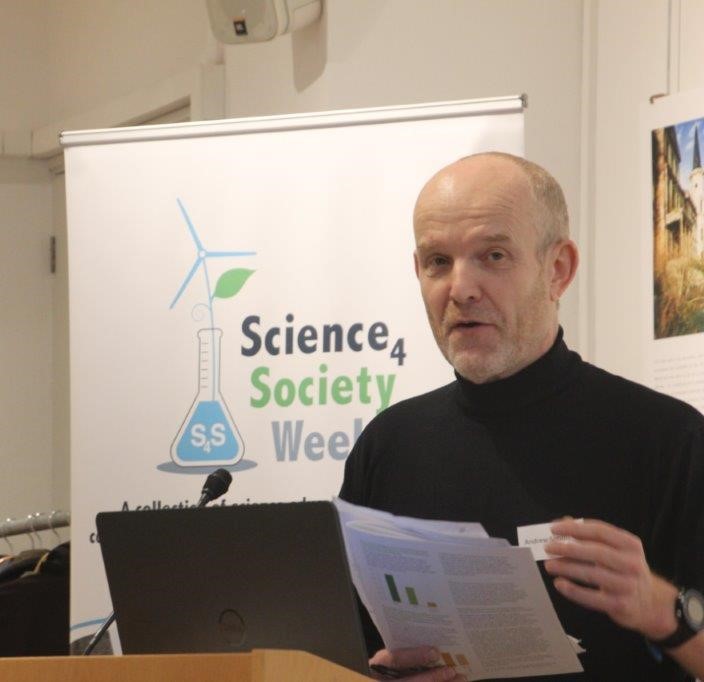 Andrew Simms has a background in political economy and international development. In addition to post at SGR, he is also co-ordinator of the Rapid Transition Alliance, a co-founder of the New Weather Institute, a research associate at the Centre for Global Political Economy, University of Sussex. He was policy director of the New Economics Foundation (nef),for over a decade. During that time, he founded the nef’s work programme on climate change, energy and interdependence, instigated their ‘Great Transition’ project, and ran work on local economies.
He has written several books include: Badvertising: Polluting Our Minds and Fuelling Climate Chaos (2023, with Leo Murray); Cancel the Apocalypse: the New Path to Prosperity (2017); Ecological Debt: The Health of the Planet & the Wealth of Nations (2009), and Tescopoly: How one shop came out on top and why it matters (2007). He has written often for The Guardian and broadcast with the BBC World Service and was described by New Scientist magazine as 'a master at joined-up progressive thinking’.
Andrew is an Advisor to SGR's Board of Directors.
Emily Heath BSc PhD
Finance & Membership Manager
 Dr. Emily Heath has a BSc in geophysics and a PhD in geochemistry, and has had a varied career including teaching Earth sciences for the Open University and Lancaster University, serving as an elected Green Party member of Lancaster City Council, as a branch secretary of the University and College Union, and as a former non-executive director of a local Community Interest Company that promotes sustainable living.
She has been on the steering group of Ethics4USS, which campaigns for ethical investment of university staff pensions, and is chair of North Lancashire Green Party and a trustee of the Friends of Freeman's Wood CIO.
Emily is an ex-officio member of SGR's Board of Directors.
Rowan Harris
Communications Assistant
 Rowan Harris has a background in critical security studies, with a particular focus on water and climate security. His master's dissertation critically examined a ‘water crisis’ discourse within Israeli media seeking to obscure the causes of Palestinian water insecurity while simultaneously positioning Israel's private water sector as the ‘solution’ and reinforcing Israeli dominance over Palestinian water resources.
He has worked on national and international energy systems projects at Carbon Trust, as well as in several communications roles, including at the UN Environment Programme’s Disasters and Conflicts branch.
Alongside his role as the SGR communications assistant, he works in the field of deliberative democracy, where he spends much of his time organising and facilitating climate juries and assemblies.
Jan Maskell MA MSc PhD CPsychol
Education Director
Jan Maskell works for SGR on a consultancy basis, co-ordinating SGR's education projects (currently mainly the Closing Loops project). Her biography can be found below.
Jan is also the Co-Chair of SGR's Board of Directors.
Directors
Philip Webber BSc PhD DIC
Co-Chair
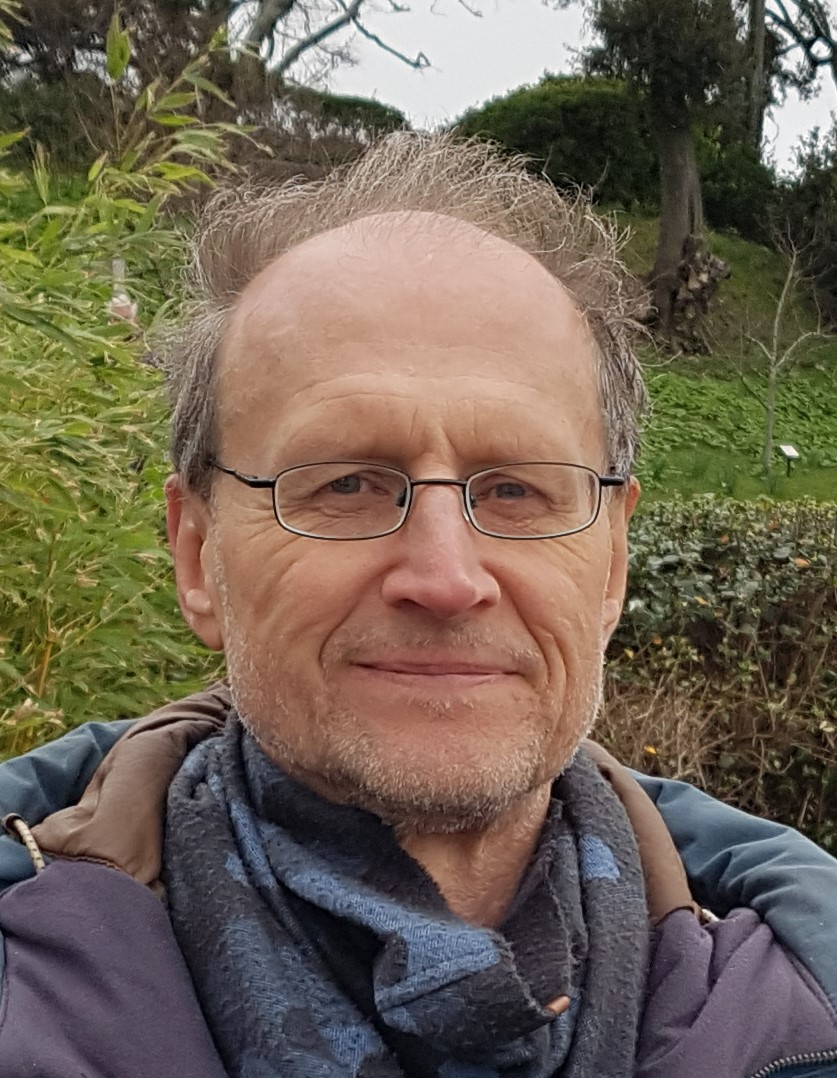 Dr Philip Webber has chaired SGR since its creation in 1992 (except for 2001-3). He began his career as a research physicist at Imperial College. Phil has written widely on the unacceptable risks of nuclear weapons and growing militarism. He co-authors London After the Bomb, and Crisis Over Cruise. He was one of the organisers of the London Nuclear Warfare Tribunal (1983). Since then, he has contributed to or written many articles about the Trident nuclear system, Chernobyl, Zaporizhizhia, UK military strategy and the malign influence of corporations and the military upon science and technology. He was one of the expert witnesses on the impacts of nuclear weapons for the conferences leading up to the UN nuclear ban treaty (TPNW). In 2017, this collective effort was awarded the Nobel Peace Prize.
After leaving academia Phil headed one of the UK's leading and award-winning environmental programmes in Kirklees Council, West Yorkshire up to 2011, where he headed a £6m ($10m) per annum low carbon renewable energy, energy conservation and grants programme. After this, he spent a short period as a vising professor at the University of Leeds working on city-scale low carbon programmes. He was director of a not-for-profit energy company (Yorkshire Energy Services, CIC) up to 2021.
Phil continues to contribute to material about new weapons systems, the pervasive influence of the military, and pathways towards a low carbon society and demilitarised human security.
Jan Maskell MA MSc PhD CPsychol
Co-Chair
 Dr Jan Maskell works as a self-employed Chartered Psychologist and is a registered Occupational Psychologist, helping individuals at work, teams and organisations to achieve their potential. She has worked across all sectors and is currently focusing on not-for-profit and ethical organisations through her consultancy. Her work has included: policy development; designing and delivering assessment and development centres; facilitating events; training; management development and coaching; and she teaches part time at a university on postgraduate programmes. Jan has an MA in training and development, an MSc in occupational psychology and her PhD was in educational research.
Jan's early career was in building design and architecture and she worked on several projects including new Crown and County Courts at Oxford, Leeds and Wood Green. She is Chair of the Going Green Working Group which is part of the British Psychological Society's Division of Occupational Psychology that investigates the psychology of environmentally sustainable behaviour in the workplace.
Other Directors
Keith Baker BSc MSc MSc PhD FRSA

Nico Edwards BA MSc
_0.jpg) Nico is undertaking postgraduate research on the Ministry of Defence's Climate Change and Sustainability Strategic Approach, supervised by SGR Patron Professor Anna Stavrianakis. She previously studied at School of Oriental and African Studies (SOAS) in London, gaining expertise in international humanitarian law, political economy and interdisciplinary peace and security studies.
Nico is undertaking postgraduate research on the Ministry of Defence's Climate Change and Sustainability Strategic Approach, supervised by SGR Patron Professor Anna Stavrianakis. She previously studied at School of Oriental and African Studies (SOAS) in London, gaining expertise in international humanitarian law, political economy and interdisciplinary peace and security studies.
After graduating in 2020 she undertook a placement with Parliamentarians for Nuclear Non-Proliferation and Disarmament (PNND) whilst volunteering for Action on Armed Violence and Campaign Against Arms Trade, carrying out research and advocacy around arms control, disarmament, sustainable development and climate action. She has also volunteered as PNND and Youth Fusion Program Officer, coordinating intergenerational cooperation in various disarmament fields.
Advisors to the Board of Directors
Current Advisors are Fiona McOwan, Philip Inglesant and Marion Hersh.
Fiona McOwan BSc PGTC
 Fiona has a degree in Chemistry from Heriot Watt University. After graduating she was offered a job in industry but opted to train as a High School Teacher and qualified with the Post Graduate Teaching Certificate in 1976.
She taught for two long periods, firstly from 1976-1995 in the then Lothian Region, then from 2010-2019 in Fife. It was in the latter period that she found and joined Scientists for Global Responsibility, with relief at finding a community of like-minded scientists. She is also a member of Scottish CND, WILPF UK and the Scottish Green Party.
Philip Inglesant BSc MSc PhD
Dr Philip Inglesant teaches and researches Responsible Innovation in areas including AI, quantum computing, and information technologies more broadly. He co-authored reports “Thinking Ahead to a World with Quantum Computers: The Landscape of Responsible Research and Innovation in Quantum Computing” and “Responsible Innovation in Quantum Technologies applied to Defence and National Security” as part of the Networked Quantum Information Technologies hub based in Oxford University.
Philip completed his PhD in the intersection of Human-Computer Interaction and Public Policy at University College London in 2007. He has worked in areas including human and social aspects of information security and innovation in the Future Internet. He also holds a degree in Mathematics from the University of Exeter and a masters in New Media, Information and Society from the London School of Economics. Philip was an active member of Electronics and Computing for Peace in the early 1990s, before it merged into SGR.